The moment you stretch your body and break through the water surface in the water, swimming brings not only coolness and relaxation, but also a dual exercise for both your body and mind. But many people may have had such a problem: they have only been swimming for a short while, yet they are out of breath. Despite having exerted a great deal of effort, the forward speed was still not satisfactory. In fact, the crux of the problem often lies in the “posture”. Whether you are a competitive enthusiast in pursuit of performance or a casual swimmer enjoying time in the water, optimizing your swimming posture can bring about a qualitative leap in your swimming experience. Today, let’s break down the value of correct swimming strokes and share a set of optimization techniques that everyone can use.
Don’t ignore it! The correct swimming posture is the “invisible engine” of swimming.
Many people focus on the “force of the stroke” when swimming, but neglect the “basic framework” of posture. In fact, the quality of your swimming posture directly determines your swimming efficiency and health safety. These three core values deserve everyone’s attention:
1. Enhance efficiency: Ensure that every bit of effort is devoted to “pushing forward”
Inefficient swimming strokes will make you constantly struggle with resistance in the water – your body sinks and your movements become chaotic. Even though you have expend a lot of energy, you are just struggling in place. The correct posture can keep the body in a horizontal and streamlined shape, just like a small boat that precisely breaks through water, minimizing the obstruction of water to the greatest extent, allowing you to swim further and more easily with the same strength, and bid farewell to the embarrassment of “collapsing after swimming 50 meters”.
2. Breakthrough Speed: Unlock the key to “effortless and fast travel”
The core of speed is not “rowing hard”, but “applying force skillfully”. The correct swimming stroke can help you find the point of propulsion: for instance, the core rotation in freestyle and the coordination of kicking and clamping in breaststroke. By standardizing the movements, the arms, legs and core can form a synergy, which not only reduces ineffective movements but also amplifies the propulsion effect, allowing you to naturally “skate” faster.
3. Avoiding Injuries: Install a “protective shield” for joints
Swimming is known as an “injury-free sport”, but this is only based on correct posture. Many people experience shoulder pain and stiff back after swimming, and the root cause lies in incorrect postures – such as excessive shoulder swinging during freestyle swimming or knee tilting during breaststroke. Over time, this can lead to rotator cuff injuries and knee joint strain. Standard swimming postures can keep joints in a natural state of stress, reducing the risk of exercise from the source.
4 Core Tips to Optimize Your Swimming Posture Step by step
Optimizing swimming strokes is not about starting from scratch, but about making precise adjustments in the details. Combining the common requirements of common swimming strokes such as freestyle and breaststroke, these several techniques are worth focusing on practicing:
1. Start by practicing “body posture” : Maintaining a level position is the top priority
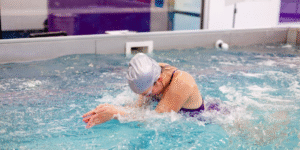
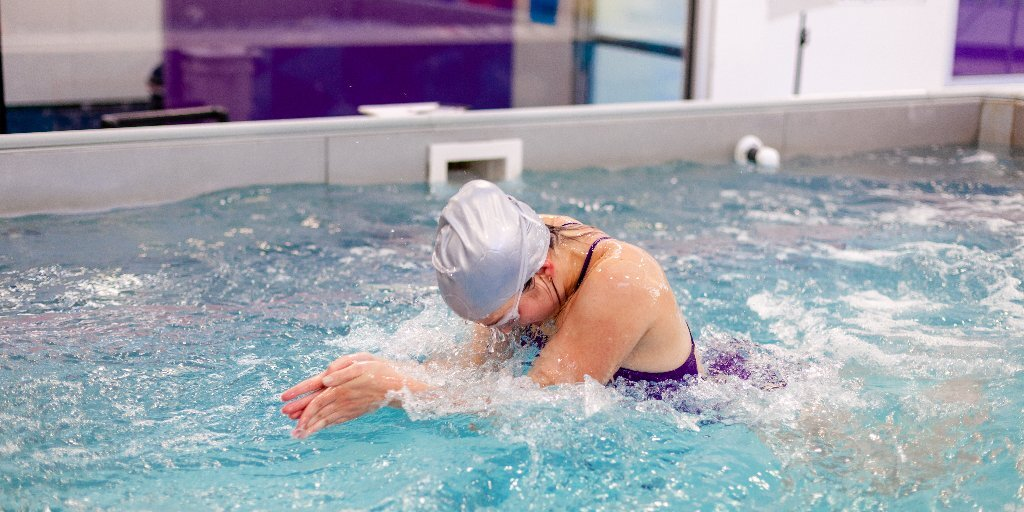
The posture of the body in water directly determines the magnitude of resistance. No matter which swimming style you choose, always remember “tighten your core and keep your body level” : When swimming freestyle and backstroke, imagine a line above your head pulling upwards to keep your body parallel to the water surface and prevent your buttocks and legs from sinking. When swimming breaststroke, do not lift your head too much when taking a breath. Keep your chin close to the water surface to reduce the resistance caused by your body tilting. You can first practice “floating” in the shallow water area – relax your body, try to control the rise and fall of your body by breathing through your lungs, and find the feeling of “horizontal floating”.
2. Standardize “core force” : Bid farewell to the misunderstanding of “relying solely on one arm”
Many people rely entirely on the strength of their arms when swimming, which is a typical “inefficient misunderstanding”. The core (waist and abdomen) is the “power hub” of swimming strokes: In freestyle, the core turns to drive the arms to stroke, which not only reduces the burden on the shoulders but also increases the force of the stroke. After kicking in the breaststroke, the body slides forward by tightening the core. You can practice planks and crunches on land in your daily life to enhance your core control. When swimming, deliberately remind yourself to “use your waist to drive the movements”.
3. Optimize “arm movements” : When paddling, one should “grab water” rather than “slap water”
The key to arm stroke is to “effectively catch water”. Take freestyle swimming as an example. When your arms enter the water, do not insert them straight into the water. Instead, slightly bend your elbows, touch the water with your fingertips first, and push the water backward like “holding a big ball” until it reaches the area near your thighs, then quickly exit the water. When swimming breaststroke, do not swing your arms too wide. Keep them within the extension line of your shoulders to avoid excessive abduction which may cause shoulder injuries. When paddling, imagine that your palm has an “adsorption force”, and each time you paddle, you must “firmly grasp the water” before exerting force.
4. Relying on “professional feedback” : The fastest way to avoid detours
Practicing on one’s own can easily lead to being “blind to the situation” – taking the wrong posture without realizing it. The most efficient way to optimize is to find a professional swimming coach: they can precisely point out problems such as your “sinking body” and “misaligned force application” through on-site observation, and also design targeted exercises based on your situation (such as using legboards to practice leg movements and using water palms to enhance the sense of grasping water). If you don’t have a coach for the time being, you can also use your mobile phone to take pictures of your swimming strokes by the pool. When you slow down and review them, many details will be clear at a glance.
Finally, I want to say: The key to optimizing swimming strokes lies in “deliberate practice”
Optimizing your swimming posture is not something that can be achieved overnight. You may need to slow down temporarily and shift your focus from “how many meters you have swam” to “whether each movement is standard”. At the beginning of the adjustment, you may feel “unaccustomed”, but as long as you persist in spending 10 to 15 minutes each day focusing on practicing one detail – for instance, doing floating today and core rotation tomorrow – after a few weeks, you will clearly feel that you swim more easily, your shoulders are not sore, and your speed has quietly increased.
The charm of swimming lies in living in harmony with water. When your posture becomes more and more standard, you will truly experience the ease and joy of “the unity of man and water”. Starting from today, incorporate these skills into your training and gradually refine them. You will discover a stronger self.