-
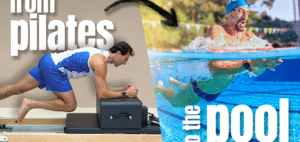 When swimmers want to get faster, the instinct is usually the same: more laps, more meters, more grind. But what if one of the most effective ways to improve your speed isn’t in the water at all?
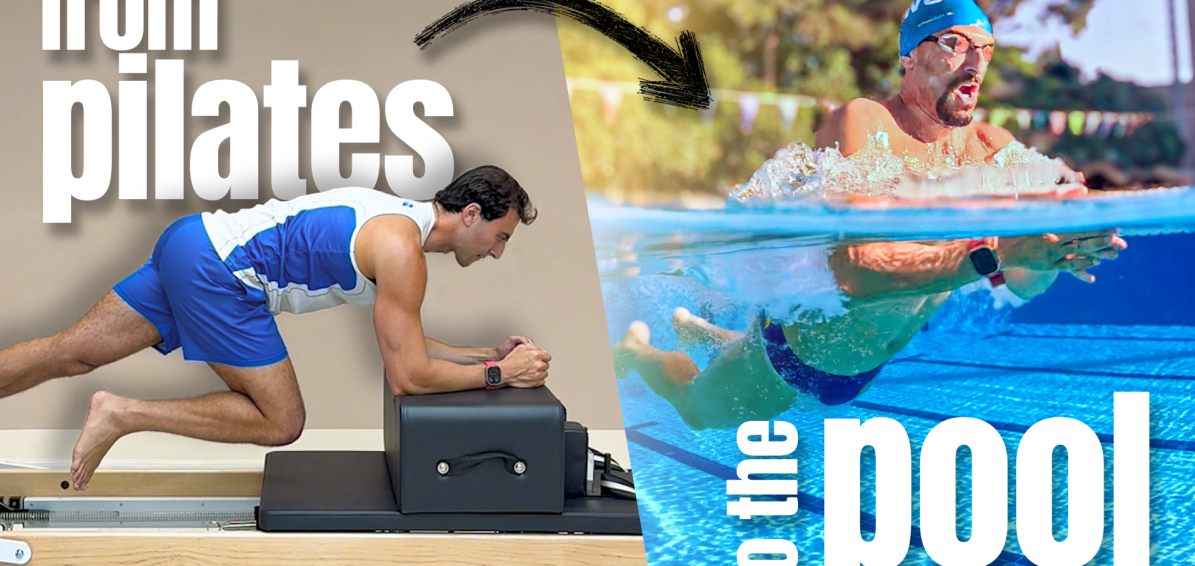
Enter Pilates—a training method that builds deep core strength, sharpens body alignment, and helps you move through the water with more power and less strain. It’s not just stretching. It’s one of the smartest dryland tools a swimmer can use.
What Exactly Is Pilates?
Pilates was created by Joseph Pilates during World War II as a rehabilitation method. Today, it has evolved into a complete conditioning system focused on controlled resistance, mindful movement, and full-body strength.
Unlike traditional gym workouts, Pilates emphasizes awareness.
You’re not just doing reps—you’re learning how to move with intention. Every breath, every contraction, and every transition teaches you how to control your body more efficiently.For swimmers, that mind-body connection is gold. The precision and stability you build on the mat or reformer translate directly into cleaner strokes and better efficiency in the pool.
5 Ways Pilates Improves Swimming Performance
1. Superior Core Strength & Stability
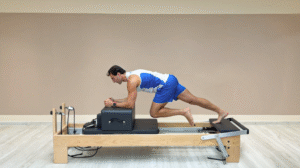
Your core is the engine of every stroke—connecting your pull and kick into one smooth chain.
Pilates targets the deep stabilizers (transverse abdominis, obliques, spinal extensors, glutes), helping you maintain a long, tight streamline even under fatigue.On the reformer, lighter resistance demands more control, forcing your core to activate without over-bracing. That’s how swimmers build elite-level body tension and stability.
2. Better Body Alignment
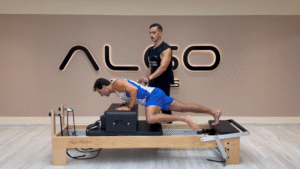
Pilates constantly cues alignment: “lengthen your spine,” “anchor your pelvis,” “reach through your crown.”
This builds awareness of how your body moves in space.In the water, that means:
-
Better posture
-
Reduced drag
-
More efficient rotation
-
Smoother stroke mechanics
Even a small improvement in alignment leads to noticeable speed gains.
3. Strong, Mobile Shoulders
Swimmers put enormous stress on their shoulders. Pilates balances strength with mobility through controlled movements that open the chest, train the rotator cuff, and stabilize the shoulder girdle.
Exercises like single-arm lat pulls, spinal rotations, and prone extensions mimic swimming mechanics while reinforcing healthy shoulder movement.
4. Improved Hip Extension & Leg Power
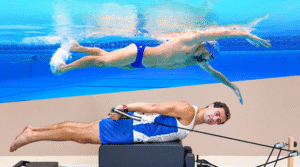
Hip mechanics are critical for freestyle kicking, backstroke rotation, and breaststroke gliding.
Pilates strengthens the hips without overloading the lower back, leading to:-
More powerful kicks
-
Better rhythm between upper and lower body
-
Increased propulsion
Movements such as leg circles, side stretches, and hip hinge drills build both mobility and strength.
5. Fewer Injuries & Longer Careers
Pilates is low-impact but highly effective. It trains the body under controlled tension, strengthening joints and improving stability without pounding.
This reduces risk of:
-
Shoulder impingement
-
Lower back strain
-
Hip tightness
-
Overuse injuries
It’s sustainable training that keeps swimmers moving well for years.
Key Pilates Exercises for Swimmers
You don’t need a reformer to get started. Try these mat-based movements inspired by the MySwimPro × Anest Mano session:
-
Spinal Roll-Downs – Build spinal mobility and core control.
-
Rotational Twists – Strengthen obliques and improve stroke rotation.
-
Resistance Band Lat Pull-Downs – Mimic underwater pull mechanics.
-
Prone “Swimming” Raises – Activate the back chain for better posture.
-
Leg Circles & Extensions – Improve hip mobility and kick control.
Each exercise reinforces the three pillars of efficient swimming: awareness, control, and elongation.
The Science of Control
In Pilates, resistance isn’t about lifting heavy—it’s about moving with precision. Instructors often describe springs by effort level rather than weight.
Around 70–75% resistance is the sweet spot for building endurance and strength without joint strain.
As Fares noted after trying a light-spring plank:
“The resistance felt like a seven, but the control required was a ten.”That level of control is exactly what separates a sloppy stroke from an elite one.
Why Swimmers Should Add Pilates to Their Training
Pilates improves:
-
Core connection
-
Shoulder stability
-
Spinal mobility
-
Body awareness
-
Stroke efficiency
-
Injury resilience
It’s no wonder professional swimmers, triathletes, and world-class coaches now include Pilates in dryland training programs.
Move With Purpose—In and Out of the Water
Swimming isn’t just strength and endurance. It’s control, precision, and awareness. Pilates develops all three.
It teaches you how to move efficiently, breathe intentionally, and engage your body from the inside out. So next time you plan your training week, don’t just add more meters—add more mindful movement.
As Anest Mano puts it:
“Pilates improves your alignment, positioning, and movement patterns. You understand your body better—and that awareness translates everywhere.”
So the real question isn’t if swimmers should do Pilates—it’s when you’ll start.
-
Want to Swim Faster? Start Outside the Pool.
Previous Article Next Article
The Mediterranean Diet: Food Choices, Health Benefits, and a Beginner’s Guide
Menopausal Migraines: Dietary Guide – Avoid Triggers & Eat Right to Relieve Discomfort

Related Posts

Why Swimming Makes You Hungry
November 19, 2025
Six Health Benefits of Swimming in Saltwater Pools
November 18, 2025